- June 6, 2026
- by Jazeeraadv
Materials Used in High-Visibility Reflective Safety Signage
Table of Contents
- Key Takeaways
- What is high-visibility reflective safety signage?
- Key materials used in reflective safety signage
- Why does material selection matter?
- Benefits of reflective safety signage
- Industry insights example
- How to choose the right Material?
- Bottom line
- Frequently asked questions
Key Takeaways
- The night visibility depends on the reflective sheeting, which is the main material.
- Aluminum is still the material of choice for long-lasting safety signage for outdoor areas.
- Protective coatings greatly prolong sign life and performance.
- The right materials ensure greater safety, compliance, and long-term cost efficiency.
High-visibility reflective safety signage is created with special materials like reflective sheeting, aluminum, ACP panels, acrylic, vinyl graphics, and protective coatings. These materials promote sign visibility throughout the day, at night, and in difficult weather. The right material can enhance safety, durability, compliance, and long-term performance.
From construction sites and industrial facilities to warehouses, roadways, and commercial properties, reflective safety signs are an essential tool for accident prevention and effectiveness in directing individuals. When searching for the best safety signage board in Dubai, businesses often consider material quality as a key factor, as it affects the sign’s visibility and longevity.
What is high-visibility reflective safety signage?
High-visibility reflective safety signage is a sign that has reflective materials to reflect light back to its source so that messages are visible even in low light.
These signs may be used for:
- Construction zones
- Industrial facilities
- Manufacturing plants
- Warehouses
- Parking areas
- Roads and highways
- Commercial buildings
- Emergency exits
Moreover, as safety protocols evolve and grow more rigorous, businesses are increasingly turning to expert signage solutions Dubai
firms to set up safe and lasting safety signage.
Key materials used in reflective safety signage
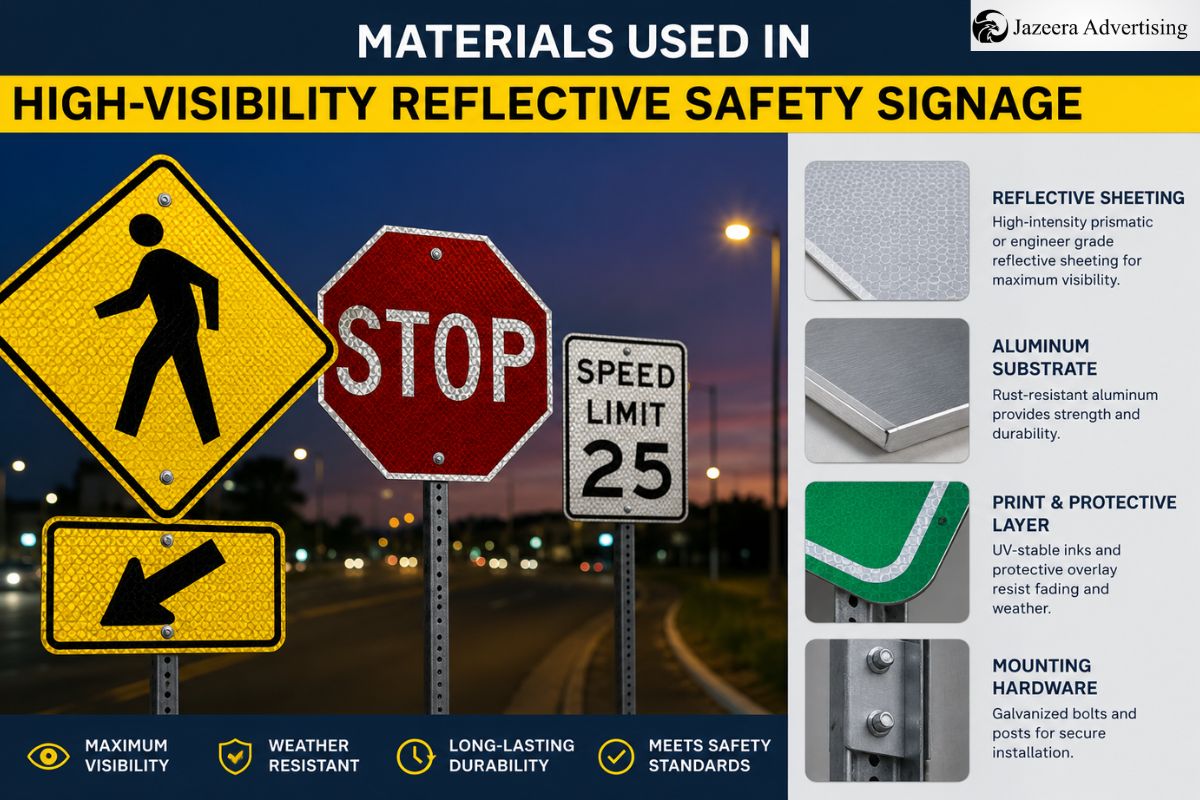
1. Reflective Sheeting
The reflective section of safety signage is the most important part.
It has microscopic glass beads and/or prismatic technology that efficiently reflects light.
Common types include:
| Reflective Grade | Application |
| Engineering Grade | General safety signs |
| High-Intensity Grade | Industrial zones |
| Diamond Grade | Highways and critical safety areas |
Benefits:
- Excellent nighttime visibility
- UV resistance
- Long lifespan
- Improved safety compliance
2. Aluminum
One of the most popular backing materials for outdoor safety signage is aluminum.
Why it is preferred:
- Rust-resistant
- Lightweight
- Strong and durable
- Can withstand severe conditions.
Additionally, the many organizations opt for aluminum-based materials from the best outdoor signage company in Dubai because of their resistance to excessive heat, sand, and dampness.
3. ACP Panels (Aluminum Composite Panels)
ACP panels are both durable and present a professional look.
Features include:
- High structural strength
- Weather resistance
- Smooth surface finish
- Long-term durability
Moreover, ACP is often utilized for big safety information boards and industrial directional signage.
4. Acrylic
Acrylic tends to be the choice when visibility and appearance are important.
Advantages:
- Neat and neat overall finish.
- Excellent print quality
- Suitable for indoor safety signage
- Good durability
Acrylic is ideally suited for use in commercial buildings, offices, hospitals, retail, and other settings.
5. Vinyl Graphics
The safety messages, symbols, and warnings printed on signs are embedded in vinyl graphics.
Quality vinyl offers:
- Sharp text clarity
- Strong adhesion
- UV resistance
- Fade resistance
The best vinyl is used by professional sign makers for long-lasting readability of vital safety information.
6. Protective Coatings
Great care should be taken to cover reflective signage with protective laminates and coatings to preserve its life.
These coatings provide:
- Scratch resistance
- Chemical resistance
- UV protection
- Moisture protection
Therefore, this extra layer is particularly beneficial in industrial settings where signs are subjected to a high volume of usage and challenging environments.
Why does material selection matter?
Materials are a critical element in the effectiveness of a safety sign.
Materials of poor quality can lead to:
- Reduced visibility
- Faster fading
- Structural damage
- Increased replacement costs
- Safety compliance issues
Quality materials will make signs clearly visible and effective for their intended duration. That’s one of the things that makes it important for businesses to work with the best signage company in Dubai to ensure that the materials used are appropriate to the project they are working on.
Benefits of reflective safety signage
- Better Visibility
Reflective materials make it easier to read in low light and at night.
- Enhanced Safety
Clear warnings minimize accidents and raise awareness on the job.
- Regulatory Compliance
It is important to have signage standards in many industries that need to keep workers and the public safe.
- Longer Lifespan
Low maintenance and replacement costs of durable materials.
- Strong Brand Credibility
Safety signage is a sign of safety and professionalism in the business.
Industry insights example
The large industrial facility was facing frequent problems with fading warning signs at high-risk areas around the facility.
Upgraded signs to high-intensity reflective aluminum-backed sign sheeting and protective coating and reported:
- Improved visibility during night shifts
- Faster hazard identification
- Reduced maintenance requirements
- Improved adherence to safety audits.
This example illustrates how the quality of materials can have a direct impact on workplace safety and efficiency.
However, there are companies like Jazeera Advertising that can regularly assist companies in the right choice of material depending on the environmental conditions, the visibility, and the safety regulations.
How to choose the right Material?
Consider these following factors:
1. Installation Location
There are different material specifications for indoor and outdoor environments.
2. Visibility Requirements
The higher-risk areas may require premium reflective grades.
3. Environmental Conditions
Material performance is affected by heat, humidity, chemicals, and dust.
4. Expected Lifespan
Higher-quality materials are used in longer-term installations.
5. Compliance Standards
Before choosing the materials for signage, be sure to check the regulatory requirements.
Professional providers like Jazeera Advertising carefully evaluate these factors to create lasting and productive signage solutions.
Bottom line
The effectiveness of high-visibility reflective safety signage relies heavily on materials used. In addition to protecting the artwork, materials such as reflective sheeting, aluminum, ACP panels, acrylic, vinyl graphics, and protective coatings help to ensure visibility, durability, and safety compliance.
When choosing the best safety signage board in Dubai, companies should not only consider the cost but also the quality of the materials used. Reliable signage suppliers such as Jazeera Advertising can assist companies in deciding on signage options for safety, maintenance, and tough surroundings. Reflective signage is an investment that can create long-lasting benefits over the years and help prevent accidents.
Frequently asked questions
Aluminum and high-intensity reflective sheeting are usually some of the most effective and long-lasting solutions for outdoor use.
Reflective sheeting enhances visibility by reflecting light, and in low-light and nighttime situations, signs are easier to see.
The useful life of reflective signs is somewhat dependent upon the material’s quality and exposure to the environment and can range from 5 to 12 years or longer.
Acrylic can be used in many indoor applications, but in severe outdoor industrial applications, it might not be the most appropriate material.
High-quality materials, placement, routine checks, and installation by professionals can greatly enhance signage performance.
Digital Compliance Boards: Future of Industrial Safety
Safety Signage Cost Guide for Businesses