- September 9, 2026
- by Jazeeraadv
Frosted Glass Reception Signs: Why Businesses Love Them
Table of Contents
- Key takeaways
- What is frosted glass reception signage actually?
- Why are so many offices switching to glass?
- Frosted glass vs other sign materials
- How does etching turn plain glass into a sign?
- Choosing a design that fits your office
- Mistakes that cost businesses money
- Expert tips for signs that last
- Bottom line
- Frequently asked questions
Frosted-glass reception signs are commonly chosen by Dubai companies for their reception signage since they are easy to clean, scratch-resistant, and require less maintenance than any illuminated or metallic competitors in the long run. Customers already start forming an opinion about a business the moment they enter it, and a survey conducted by FedEx Office revealed that 76% of consumers have entered establishments for the first time that they had never seen, only due to their attractive signage.
A reception sign performs an identical function for employees, suppliers, and potential employees right after they step out of the elevator. The process of glass etching creates texture and also allows for shadows that flat vinyl or paints simply cannot do, and that is one of the reasons why it is widely used in law firms, hospitals, and corporate offices around the UAE.
Key takeaways
- Frosted glass signage is one of the most effective ways of making reception areas look professional without the use of illuminated signs or regular upkeep.
- Reception signs in Dubai can give the impression that they are a temporary solution if they do not have a glass finish that elevates them above other alternatives.
- Different methods of etching allow for varying textures and costs.
- The quality of the sign relies on the placement, lighting, and conditions under which the surface was prepared.
What is frosted glass reception signage actually?
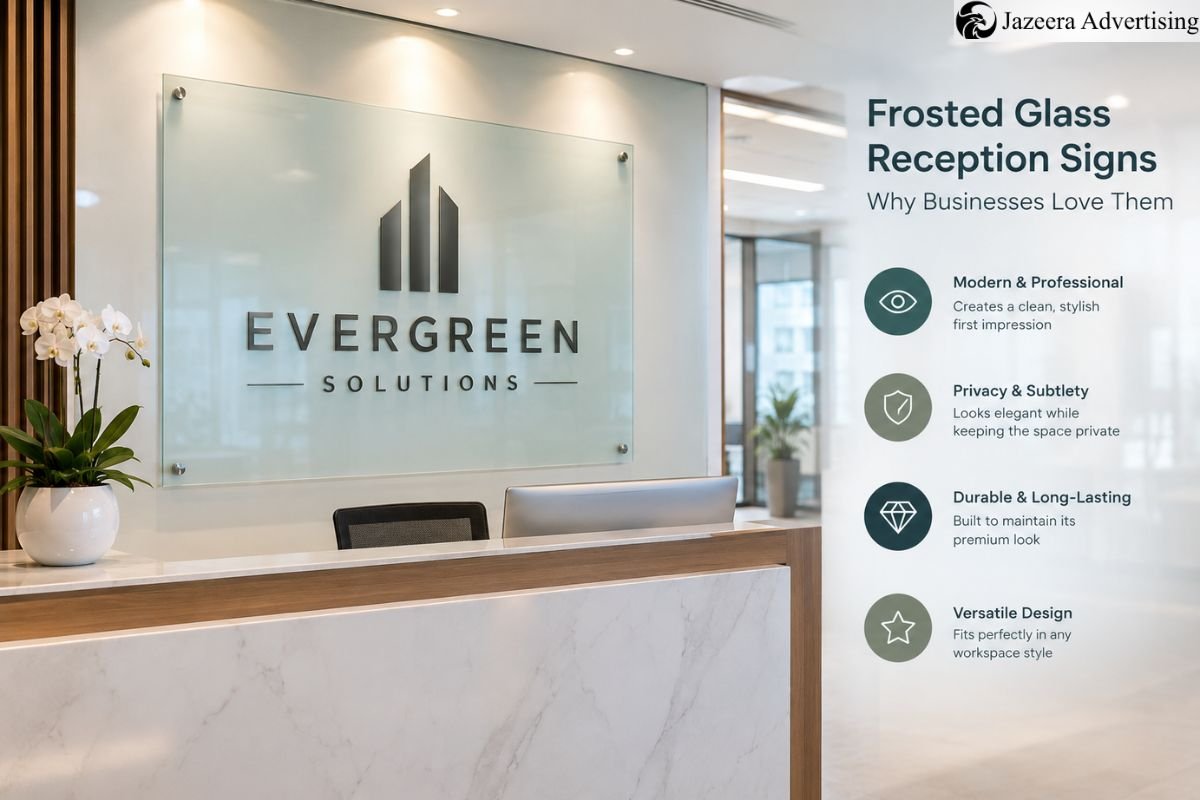
A frosted glass reception sign is a type of sign that is made out of glass measuring 10mm to 19mm thick and is treated in such a way that light passes through it unevenly. The treated areas become milky white, while the untreated parts of the glass remain clear, meaning that the sign can display different elements of the sign, such as logos and taglines, against the milky surface, as those parts that are not coated with frosting remain clear.
However, the sign needs to be mounted onto a wall, either behind the reception desk with the use of standoffs, a panel adhesive system, or the use of a recessed channel, and it isn’t powered by electricity, which makes it more economical than acrylic signs that require electricity to operate.
Why are so many offices switching to glass?
Frosted glass is known to yield good photographs, which is probably more important than most people believe. A reception wall constantly appears in corporate videos, LinkedIn posts, and on a client’s phone camera when they visit the site. Metal lettering can look outdated in under a couple of years depending on the finish used, while printed vinyl may peel at the edges within 18–24 months in a UAE location with strong air conditioning in action.
Glass remains untouched by any effects that fluorescent or LED lighting may have on printed materials. Additionally, glass withstands even those daily cleaning procedures that involve ordinary glass spray – something that cannot be said for signs made of painted or laminated materials.
Even the issue of costs must be addressed here. A properly executed etching technique will last longer than several processes of printing on vinyl. This is significant for a business suffering from running many branches and responsible for ensuring the consistent office branding in Dubai.
Frosted glass vs other sign materials
Here’s how frosted glass stacks up against the other common choices for a reception wall.
| Material | Typical Lifespan | Maintenance | Upfront Cost | Best For |
| Frosted glass (etched) | 10+ years | Wipe clean, no fading | Medium to high | Corporate, medical, legal offices |
| Backlit acrylic | 5-7 years (bulbs/LEDs need replacing) | Electrical upkeep | High | Retail fronts, showrooms |
| Printed vinyl on glass | 1.5-2 years | Peels, needs reprinting | Low | Short-term or promotional signage |
| Metal letters (brushed/gold) | 8-10 years | Occasional polishing | Medium to high | Luxury brands, hotels |
| Painted wall lettering | 3-4 years before touch-ups | Chips, scuffs | Low | Budget-conscious startups |
This isn’t meant to say glass wins every time. A retail storefront that benefits from backlighting at night is solving a different problem than a law firm’s reception desk that’s lit all day anyway. But for interior reception areas specifically, glass tends to offer the best ratio of appearance to long-term cost.
How does etching turn plain glass into a sign?
There are three main methods used for glass surface etching services in Dubai, and the differences actually matter for how your sign looks and ages.
- Sandblasting- uses pressurized sand or abrasive media through a stencil to physically wear away the glass surface. This gives the deepest, most tactile frosted texture, and you can feel the design if you run a hand across it. It’s the method most commercial signage shops use for reception walls because it holds detail well even on large panels.
- Acid etching- uses a chemical cream applied through a stencil to dissolve the surface layer. It produces a smoother, more uniform frost but generally less texture depth than sandblasting. Some shops prefer it for finer text or intricate logos where sandblasting might chip delicate edges.
- Laser etching- is newer and works without a stencil at all. A laser burns micro-fractures into the glass to create the frosted effect. It’s precise for small or highly detailed artwork but can be slower and more expensive for panels larger than a few square feet.
Before cutting the actual panel, a fabricator like Jazeera Advertising will usually show a client swatches of each method, since photos on a screen rarely capture the texture accurately.
Choosing a design that fits your office
Before ordering anything, walk to your actual reception space at different times of day. Morning light through east-facing windows hits a glass sign differently than the afternoon glare most Dubai offices deal with from the west.
A few practical questions worth answering first:
- Will the sign sit behind the desk, or does it need to be visible from the elevator lobby too?
- Does your brand color palette include anything that needs to be printed or vinyl-applied on top of the frosted base, since etching itself is monochrome?
- Is the reception area likely to be renovated or relocated within the next five years?
Therefore, companies searching for reception signage in Dubai often assume bigger is better, but an oversized panel in a small reception area can feel overwhelming rather than premium. A good rule of thumb: the sign should be readable from about 3 to 4 meters away without dominating the wall.
Mistakes that cost businesses money
- The most common mistake is ordering the sign before the reception wall’s final finish is confirmed. If the wall gets repainted or reclad after the glass is mounted, you’re stuck redoing the install.
- A second mistake is skipping a site measurement in favor of “estimated” dimensions sent over WhatsApp. Glass doesn’t forgive a 2cm error the way vinyl does. A miscut panel usually can’t be trimmed down without ruining the etched design.
- Businesses also underestimate mounting hardware. Standoffs and brackets need to match the wall material; drywall needs different anchors than concrete or gypsum board, and a sign that isn’t properly supported can develop stress cracks over time from its own weight.
- Some offices also treat the reception sign as a standalone purchase instead of part of a wider identity package. If your business cards, website, and reception sign use three slightly different shades of the same blue, visitors notice, even if they can’t say exactly why something feels off.
Expert tips for signs that last
Ask your fabricator for a physical sample of the glass thickness and frost finish before committing to the full order. A 10mm panel photographs almost identically to a 12mm one, but the weight, sound dampening, and perceived quality differ once it’s mounted.
Keep the etched design at least 5cm from any edge that will be covered by standoffs or brackets. This avoids awkward cropping around hardware and gives installers room to work without damaging the frosted area.
Furthermore, if your building gets strong direct sunlight on the reception wall, ask about low-iron glass. Standard glass has a faint green tint that becomes noticeable at larger sizes; low-iron glass stays clearer, which matters for logos with white or light-colored elements.
Jazeera Advertising, like most established signage shops in the city, will also push to schedule installation outside business hours. Glass panels are heavy, and the mounting process, even when quick, can disrupt a working reception desk.
Bottom line
If you want the right message to be conveyed before your staff member speaks, a frosted glass reception sign is the perfect solution. Whether it’s a client, candidate or a vendor that’s first exposed to it, it’s likely the first physical thing that person sees and the impression it leaves for a decade or more for, is worth every penny.
When you’re considering an office reception signage Dubai project and need to see samples of the material first, you don’t have to rely on a best guess estimate based on the size of your wall, Jazeera Advertising can take you through the different materials and provide you with a realistic quote.
Frequently asked questions
From final design approval, most orders take 7-12 working days depending on panel size, etching method and the additional time that may be required for sourcing custom mounting hardware.
The etched portion is translucent or white in color. If color is a brand need, it is added in by printed vinyl, painted infill or backlit panels behind the glass.
No. It just requires normal glass cleaner and soft cloth. A major difference between back lit signs and these is that no bulbs need to be replaced or electrical work must be done during their life.
Common size for wall mounted panels is 10mm to 12mm. Sometimes 15mm to 19mm is used in larger installations or freestanding dividers, for structural stability.
It isn’t safe to etch existing tempered glass after it has been installed, as this can make it weaker. New panels are etched prior to tempering and installation.
Yes, better than big signs, frequently better than big signs. A small lighted frosted panel in a small area will appear as purposeful and a large sign will create a small space.
Tinted Glass changes tint on the entire glass to provide privacy or control the amount of light that passes through the window. Frosted glass is selectively treated to form a design while parts stay fully transparent.
Etched glass signage lasts 10 years or longer with proper mounting and regular use in the office – the frosting is attached to the glass and will not fade over time.
Ideally yes. Brand consistency in materials and finishes throughout reception signage, wayfinding and meeting room signage creates brand recognition and helps customers remember and trust a business.
Single panel orders are the usual manner of doing business. More than one small sign can be placed on one well-designed frosted glass sign, which often is more affordable and cleaner looking to multiple smaller signs in many small offices and clinics.

Best Materials for Reception Letter Signage: Acrylic, Stainless Steel or Brass?
Office Branding Trends Businesses Are Following in 2026